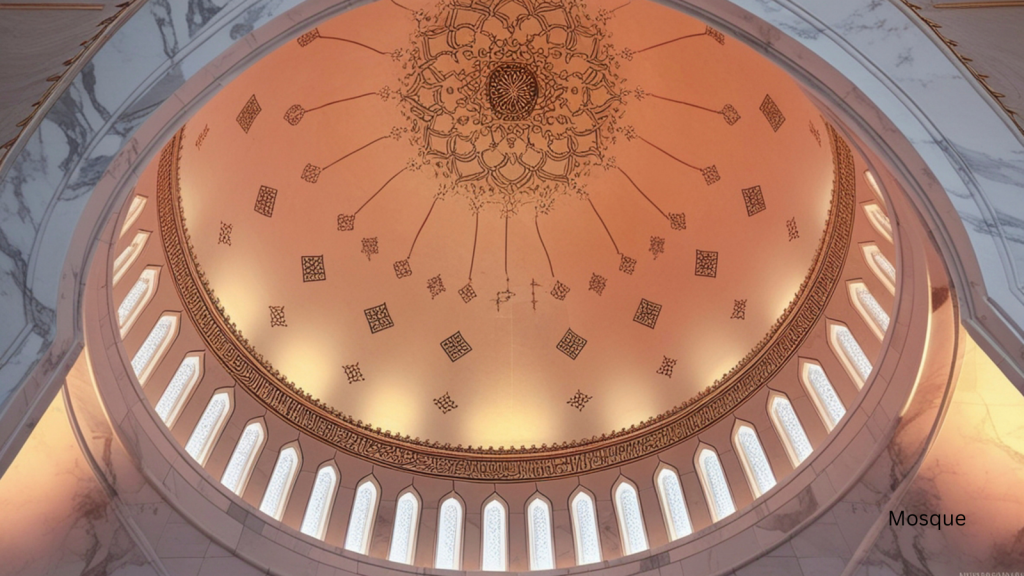
Mosques

Community

Part Two: Mosques: Power, Accountability and the Path Forward

Part Two: Mosques: Power, Accountability and the Path Forward Part One highlighted the importance of mosques and the risks of weak governance, Part Two explores what happens when power becomes concentrated—and how mosques can restore balance. When Power Shifts Too Far In some cases, authority shifts away from trustees and towards the Imam. Here, the Imam may establish the mosque, appoint trustees, and oversee both religious and administrative affairs. The structure begins to resemble an owner-managed organisation. “When one individual holds both spiritual and operational control, accountability becomes blurred.” Leadership Without Infrastructure Running a mosque requires far more than delivering sermons. It demands expertise in finance, safeguarding, construction, planning permissions, fundraising, and stakeholder management. Most Imams are not trained in these disciplines. “I often see Imams making serious mistakes in planning permissions, fundraising, construction, and financial controls—without realising what good governance looks like.” This is not a failure of character, but of structure. Many Imams operate within environments where questioning leadership is culturally discouraged, and where formal governance frameworks are absent. The result is often informal decision-making, limited oversight, and delayed recognition of risk. When Problems Surface, They Escalate Without proper systems in place, issues that could be resolved early often grow into major disputes. “I have seen disagreements between Imams escalate into investigations, litigation, and tribunals—simply because basic HR processes were missing.” Fundraising practices can also expose underlying weaknesses. “Emotional appeals may raise money—but without transparency on how the money is spent, the same issues resurface years later, often with greater damage.” The Cost of Failure When governance breaks down, the impact extends beyond internal conflict. Community trust is eroded. Donor confidence declines. Negative media narratives take hold. At a time when anti-Muslim hostility is rising, mosques should provide stability and reassurance. “Weak governance undermines mosques at the very moment they are needed most.” Rebuilding Trust Through Structure The path forward is not complicated—but it requires discipline. 1. Regulation as Protection, Not Burden Mosques must operate as charities not only in registration, but in practice. Charity Commission guidance should be understood as a protective framework rather than a regulatory burden. It covers all Mosque operation scenarios and exists to safeguard funds, people, and purpose. 2. Strategy Before Activity A clear strategy provides direction. Even a simple, agreed plan enables trustees to identify risks, measure progress, and hold leadership accountable. Without it, decisions remain informal and concentrated in individuals. 3. Stay Close to the Congregation Direct connection to the congregation is equally important. Trustees who attend and engage understand the mosque’s true pulse. Those who do not often miss early warning signs. 4. Get the Finances Right—or Nothing Works Financial management must be treated as central, not secondary. Where proper bookkeeping and oversight are in place, accountability improves, and significant savings are often realised. 5. Clear Roles, Strong Governance Finally, clarity of roles is essential. Annual appraisals of both the Chair and the Imam reinforce accountability and prevent the blurring of responsibilities. “Governance begins to fail when roles become personal rather than accountable.” A Defining Moment for UK Mosques Mosques in the UK are more than buildings. They are anchors of faith, identity, and community life. But their future will not be secured by passion alone. It will depend on governance that is transparent, leadership that is accountable, and structures that are resilient. “Because when governance fails, the cost is not just financial—it is spiritual, social, and generational.” End – Author: Nasir Rafiq BA, FCA is the Managing Partner of Dua Governance Chartered Accountants, an ICAEW firm specialising in charity financial governance and accounts. Nasir works and deals with a large portfolio of Muslim charities and Mosques in UK advising them on accounts and governance issues. He has conducted high-profile governance reviews and investigations. Nasir is the former Finance & Corporate Services Director of Islamic Relief Worldwide and holds many senior positions within the Muslim community. Email: info@duagovernance.com  

Community

Mosques, Power and Accountability: A Two-Part Special Report

Mosques across the United Kingdom sit at the heart of Muslim life, shaping not only religious practice but also education, social cohesion, and community identity. Yet behind their visible role lies a more complex reality—one shaped by governance, leadership, and accountability. This two-part article explores that reality. Part One examines the vital role mosques play in British society and the common governance challenges that can undermine them. Part Two looks deeper at power structures within mosques, the consequences when governance breaks down, and the practical steps needed to safeguard their future. Part One: The Backbone of British Muslim Life — and the Risks Within   More Than a Place of Worship Across the United Kingdom, mosques play a central and irreplaceable role in the lives of Muslim communities. With more than 2,000 mosques nationwide—including an estimated 300 to 400 in London alone—these institutions are far more than places of worship. They are hubs of education, social cohesion, and community life. Five daily prayers bring congregations together. Mosques host children’s education through madrasah, facilitate nikah and janaza ceremonies, and provide a space for reflection and support. In areas with larger mosques, entire local economies often develop—halal butchers, grocery stores, and restaurants flourish around them. A Weekly Surge of Belonging Every Friday, these spaces transform. Hundreds of thousands of worshippers—many of them young—fill mosques across the country, creating a powerful sense of unity and belonging. Yet demand continues to outstrip supply. Space constraints are a common issue, leading to constant expansion projects and the opening of new mosques. “It is no exaggeration to say that mosques are central to the preservation and growth of Islam in the UK.” The absence of mosques during the Covid-19 lockdowns made that reality even more apparent. When Governance Fails, Everyone Pays Most UK mosques operate as registered charities, bringing both protection and responsibility. Charity registration often becomes essential due to the scale of funds handled and the involvement of children, placing safeguarding at the forefront. But when governance fails, the consequences ripple far beyond the boardroom. “I often get involved when governance goes wrong—trustees fall out, the Charity Commission intervenes, or financial mismanagement emerges. Each time, the mosque suffers.” “Funds are lost to litigation, reputations are damaged, and opportunities to serve the community are missed.” These failures are rarely isolated. They often stem from recurring issues—commonly referred to as mosque politics. The Chair: Steward or Stronghold? At the centre of many governance challenges is the role of the Chair. Far from ceremonial, the Chair leads meetings, sets agendas, and represents the mosque to external stakeholders including councils, police, schools, and the NHS. While trustees collectively hold responsibility, the Chair often becomes the public face of that accountability. Problems arise when this role becomes entrenched. Many long-serving Chairs have made extraordinary sacrifices—giving their time, money, and effort to establish or expand mosques. These contributions are often foundational. But over time, sacrifice can evolve into attachment—and attachment into control. “I have seen individuals who gave everything to build a mosque become unwilling to let go—as if the Chair position were a God-given right.” When trustees don’t question, governance weakens. Mistakes are overlooked, concerns are suppressed, and accountability fades—until issues surface publicly. A strong Chair responds to scrutiny with openness. A defensive one can unintentionally deepen the crisis. A Charity, Not a Personal Legacy This reflects a deeper misunderstanding. A mosque is not an owner-managed business. In a private company, an owner carries both the risks and rewards of their decisions. In a charity, the consequences are borne by the community—through donor funds, reputation, and lost opportunity. “When governance is treated like ownership, the very purpose of the mosque is put at risk.” The Imam: At the Heart, Yet Often Undervalued If governance is one pillar of a mosque, the Imam is its heart. Responsible for leading prayer, delivering sermons, and guiding the community, the Imam’s role is central to a mosque’s impact. Yet in practice, that role is often undervalued. “I was once called urgently to a mosque committee meeting. When I arrived, the issue was whether the main senior Imam could afford to take leave to visit Pakistan.” “He sat with his head down, waiting to hear if he could go.” “When I asked his salary, it was around £700 a month. I flipped.” “I told the committee they had insulted the Imam and wasted my time. I advised him to leave—and he did. Today, he is thriving in a large mosque.” This example exposes a broader contradiction. While families invest heavily in academic education, religious leadership is often treated as a cost to minimise. Without capable and respected Imams, mosques risk becoming impressive structures with limited impact. “Grand chandeliers may impress—but they do not educate, guide, or uplift a community.” Part Two looks deeper at power structures within mosques, the consequences when governance breaks down, and the practical steps needed to safeguard their future. Click here to read Part Two: Mosques: Power, Accountability and the Path Forward.  Author: Nasir Rafiq BA, FCA is the Managing Partner of Dua Governance Chartered Accountants, an ICAEW firm specialising in charity financial governance and accounts. Nasir works and deals with a large portfolio of Muslim charities and Mosques in UK advising them on accounts and governance issues. He has conducted high-profile governance reviews and investigations. Nasir is the former Finance & Corporate Services Director of Islamic Relief Worldwide and holds many senior positions within the Muslim community. Email: info@duagovernance.com

Community

Islamic Finance, Mosques & Charities – the Missed Opportunity

This blog represents the well received presentation by the author, he gave as a guest at the launch of the Birmingham City University’s UK’s first Islamic Finance undergraduate degree course.   Islamic Finance has become a multi-billion dollar industry and is fast growing. Despite this growth and reach, this industry has had little to offer Mosques, charities and for the wider uplifting of the state and economies of disadvantaged Muslim societies worldwide. Islamic Finance has worked to make wealthy Muslims wealthier by helping them avoid the guilt that comes with breaching shariah guidelines – Although there is nothing wrong with that, in my opinion Islamic Finance has a bigger role to play in promoting the finances and impact of Mosques and charities, especially in the UK context. Islamic Finance is a component of the Islamic Economic system which aims to create a fairer and just society in which hard work is rewarded, those that are at disadvantage are supported, business and entrepreneurship is promoted, and infrastructure is built that benefits all – Mosques and charities play an equally important role in achieving these objectives. In UK, the top 20 International Muslim charities raise around £400m with around £100m raised in Ramadan alone (see blog). In total when combined, the UK Muslim charity sector can be estimated to be raising around £500m each year. This is despite it being a relatively young sector (only 30 years +) but a fast-growing sector. Mosques are built using Qard-e-Hasan financing The majority of Mosques in UK are successfully built using Qard-e-Hasan, interest free community loans, and this is also the case when they extend their facilities. There is no Islamic Finance solution in UK that provides this interest free facility to Mosques in spite of the underpinning strong business model of Mosques. Each Mosque has a ever growing number of worshippers and donors. They are engaged in a never-ending cycle of Friday prayers and Ramadan worship, during which funds are raised to return the loans. Mosques are the heart of Muslim community – this is where everything starts from (i.e. marriages), sustains (i.e. prayers and education) and ends (i.e. funerals) – promoting them should be the first priority of the Islamic Finance sector. Islamic loans for buildings and ICT systems The UK Muslim INGOs have seen a significant growth in their income. With this growth, a time comes to upscale the back-office facilities and the ICT systems – this is crucial for good governance. Some of these required investments are significant and can’t be covered by the general funds raised in one year and therefore the financing solution makes business sense. Despite the fact that these charities have stable income and have the ability to payback loans, there are no interest free solutions available to them. The existing solutions are too focused on private and commercial initiatives. Ultimately the beneficiaries suffering in the most remote parts of the world pay the price for the inefficiencies and weak governance caused by this lack of investment. Foreign exchange (forex) costs with no hedging solutions UK Muslim charities transfer around £250m each year worldwide to support beneficiaries. Sometimes the transferred currency has to exchanged up to three times before it reaches the beneficiaries. This poses a significant cost on the charity finances. Unlike the mainstream non-Muslim charities where they have hedging products available to mitigate their forex costs, the UK Muslim charities have none. Surplus cash – nowhere to go In 2020, I analysed the accounts of the top 20 Muslim charities and noted that they held around £107m in cash balances (see blog). UK Muslim charities raise around 40% of their annual income in the month of Ramadan. This is then spent through out the year based on the need and ability to deliver. The business model of the UK International Muslim charities is such that there will always be surplus cash held by them. It is unfortunate that there are lack of suitable Islamic Finance short term investment / finance solutions in place that can provide low risk returns and at the same time provide benefit to the UK community. Islamic Finance products – Sustainable relief of poverty   The UK Muslim sector often lacks the required focus and priority on activities that are at the heart of sustainability and capacity building for the long term relief and impact in UK and worldwide. The nature of these activities requires Islamic Finance input and initiative. For example: a) Micro Finance – building capacity and self-reliance These are small interest free loans to the poor and disadvantaged individuals for business and self-reliance. Micro finance projects are carried out by some household UK Muslim charities worldwide but not on the scale needed and required on the ground – partly because this is not popular with UK fundraisers and also due to local registration restrictions. However, In my opinion this activity has a significant potential in UK where a significant number of unemployed or disadvantaged youth and old can benefit. For this to work, an Islamic Finance approach is needed where businesses, professionals, charities, and government agencies need to partner and devise solutions. b) Endowments (Waqf) – investment in the future Waqf has historically been at the heart of Muslim charity with its long-term benefits in this world and in the hereafter. However, this approach is often ignored by donors over activities that provide benefit today (i.e. food projects) and also by charities due to their lack of ability to deliver such projects – these projects could be investments in self-sustaining buildings, infrastructure and businesses. Endowments are investments and although are a charitable product, there delivery is no different from any commercial endeavor. This requires the right and experienced business and commercial skill, hence endowments projects to succeed have to be large in scale so that they can afford the required delivery cost efficiently and effectively. Muslim charities often lack the right corporate structure, skill and will (due to the long-term nature) to understand and manage the risks

Accounting & Finance

Gift Aid for Mosques

During the Covid19 crisis Mosques suffered as they had to close and there was no Government support available. Despite this, many Mosques played a vital role. They managed Covid19 safe funeral prayers, promoted spiritual wellbeing using online facilities and supported the vulnerable in the community by reaching out to them. The pandemic crisis has highlighted the importance of maximising the support available from Government. Gift Aid is one of the main way, the Government supports charities – Mosques often lose out by not having the systems in place to make the correct gift aid claims. Even bucket donations collected during Friday prayers can attract gift aid with the right systems in place. Our live webinar is designed to address the knowledge gap. We have joined up with Grant Thornton Tax experts who have direct experience in helping a Mosque claim significant funds in Gift Aid. The webinar will be hosted by our Founder Director Nasir Rafiq, a widely experienced financial governance expert that helps many charities of all sizes and types within the Muslim Charity sector. Date: Thursday 2 Sept, 6-7pm, Registration link https://tinyurl.com/w5u9at79. A copy of the recording is available. Please email info@duagovernance.com for a copy with following details: Name Contact email Organisation name

Scroll to Top
Type & Search